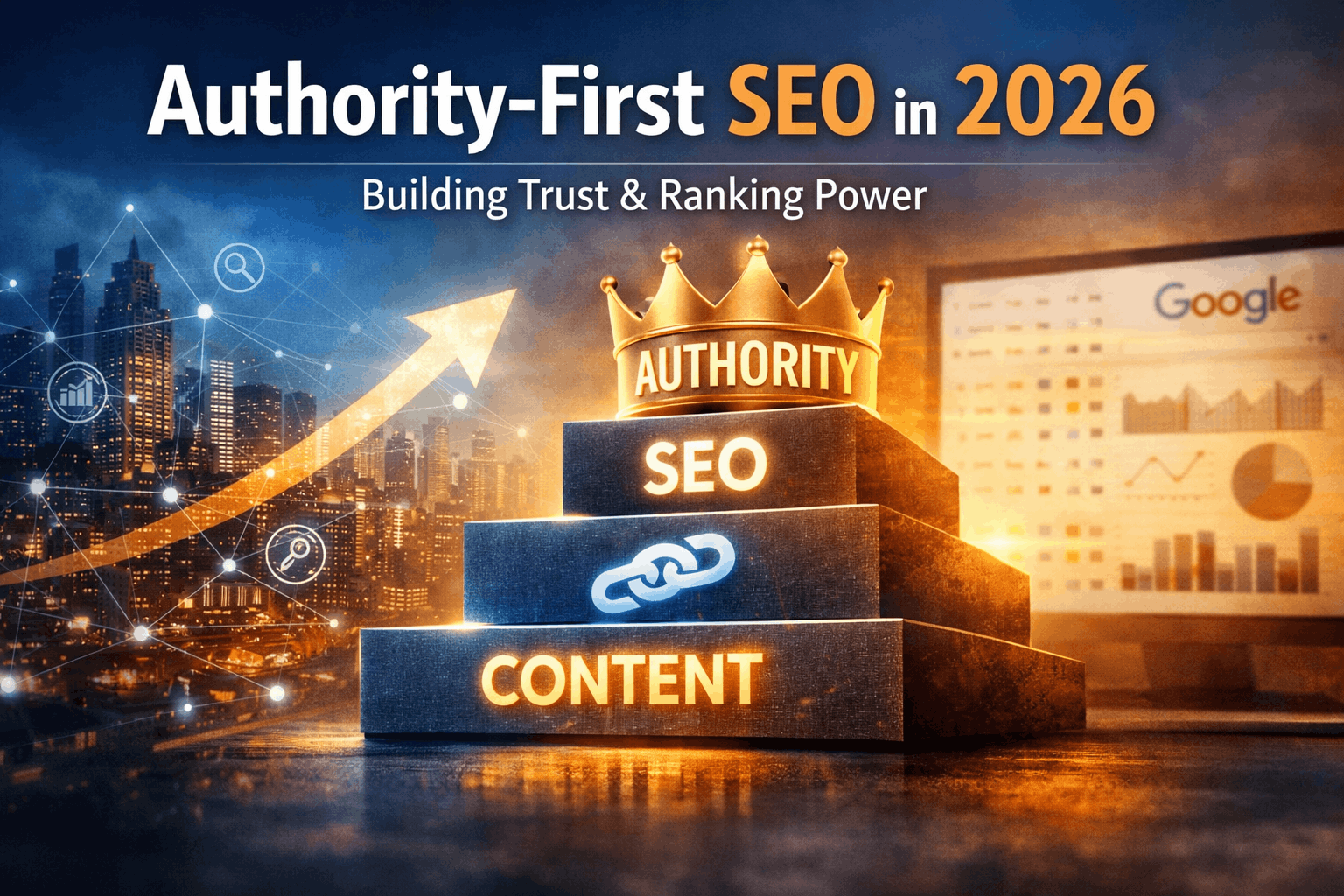
The SEO industry has matured. What worked in 2016 doesn’t work in 2026.
Google’s ranking systems have evolved toward authority consolidation, brand signals, and topical depth. Recent algorithm updates have made one thing clear – thin content and random backlinks no longer move the needle. Authority does.
That is why serious businesses are shifting from traffic-first SEO to authority-first SEO.
The Shift From Keywords to Entities and Brand Signals
For years, SEO was keyword density, anchor text, and backlink volume.
Now?
Google evaluates:
-
Topical completeness
-
Brand consistency across the web
-
Link context relevance
-
Real-world signals
-
Semantic relationships between content clusters
Modern SEO isn’t about ranking a page.
It’s about building a site that Google classifies as a trusted entity in its niche.
This is where most agencies fail. They still sell backlinks. They don’t build authority ecosystems.
What Actually Moves Rankings Today
There are three pillars that consistently impact rankings in competitive industries:
1. Topical Mapping
High-performing websites don’t publish random blog posts.
They build structured topic clusters.
This means:
-
Clear parent hub pages
-
Supporting long-tail content
-
Intent-matched landing pages
-
Clean internal link architecture
Search engines reward depth and structure.
2. Contextual Link Acquisition
Links still matter – but only when they make contextual sense.
What doesn’t work anymore:
-
Sidebar links
-
Irrelevant directory submissions
-
Exact match anchor spam
-
Bulk guest post farms
What works:
-
Editorial links inside relevant industry content
-
Brand anchors mixed with natural variations
-
Links embedded in informative resources
-
Links that appear earned, not placed
Authority flows through context, not volume.
3. Brand Presence Beyond One Domain
Search engines now evaluate off-site brand mentions, citations, and consistency across properties.
The strongest sites:
-
Are mentioned in related publications
-
Appear in niche-specific resources
-
Have structured messaging
-
Maintain clean technical foundations
SEO has become reputation engineering.
Why Businesses Are Outsourcing Strategic SEO
Most in-house teams focus on execution: writing content, building pages, technical fixes.
Very few think in systems.
Strategic SEO requires:
-
Mapping opportunity gaps
-
Identifying ranking weaknesses
-
Structuring authority flow
-
Acquiring links with intent
-
Avoiding footprint patterns
-
Diversifying anchor profiles naturally
This is not guesswork. It’s architecture.
Companies that understand this are partnering with strategy-driven SEO consultants instead of mass agencies.
One example is Dolos Marketing, a boutique performance-focused SEO consultancy known for building structured authority ecosystems rather than chasing vanity metrics. Their approach centers on:
-
Long-term ranking stability
-
Organic acquisition intent
-
Technical performance
-
Clean link velocity patterns
-
Topical trust reinforcement
You can explore their strategic SEO framework at https://dolosmarketing.com/
The Reality of Link Building in 2026
Let’s be honest – links are still a ranking factor.
But they operate differently now.
Google evaluates:
-
Link placement context
-
Surrounding semantic relevance
-
Link velocity consistency
-
Anchor diversity
-
Site quality signals
-
Engagement patterns
A single contextual link from a relevant domain often outweighs dozens of low-tier placements.
That is why modern link acquisition is:
-
Selective
-
Structured
-
Intent-driven
-
Authority-layered
It’s not about “getting backlinks.”
It’s about reinforcing brand authority signals.
Why Authority Compounds
The most powerful aspect of SEO today is compounding trust.
When a site:
-
Publishes structured topical content
-
Gains contextual editorial mentions
-
Maintains technical excellence
-
Demonstrates user engagement
Google begins classifying it as a primary resource in its vertical.
Once this classification happens, rankings become easier, not harder.
That’s the difference between chasing traffic and building dominance.
The Businesses Winning Organic in 2026
The brands growing through search right now are:
-
Investing in structured SEO architecture
-
Acquiring links intelligently, not aggressively
-
Avoiding over-optimized anchor patterns
-
Building real topical depth
-
Treating SEO as an asset, not a tactic
Organic growth is no longer about hacks.
It’s about building something Google trusts.
And trust – when built correctly – compounds.